Sniffing is more tiring than walking. A dog that spends fifteen minutes working out where something is hidden will settle more completely than one that has done a brisk half hour on a lead, because the work is mental and the arousal level stays low throughout.
Scatter and search
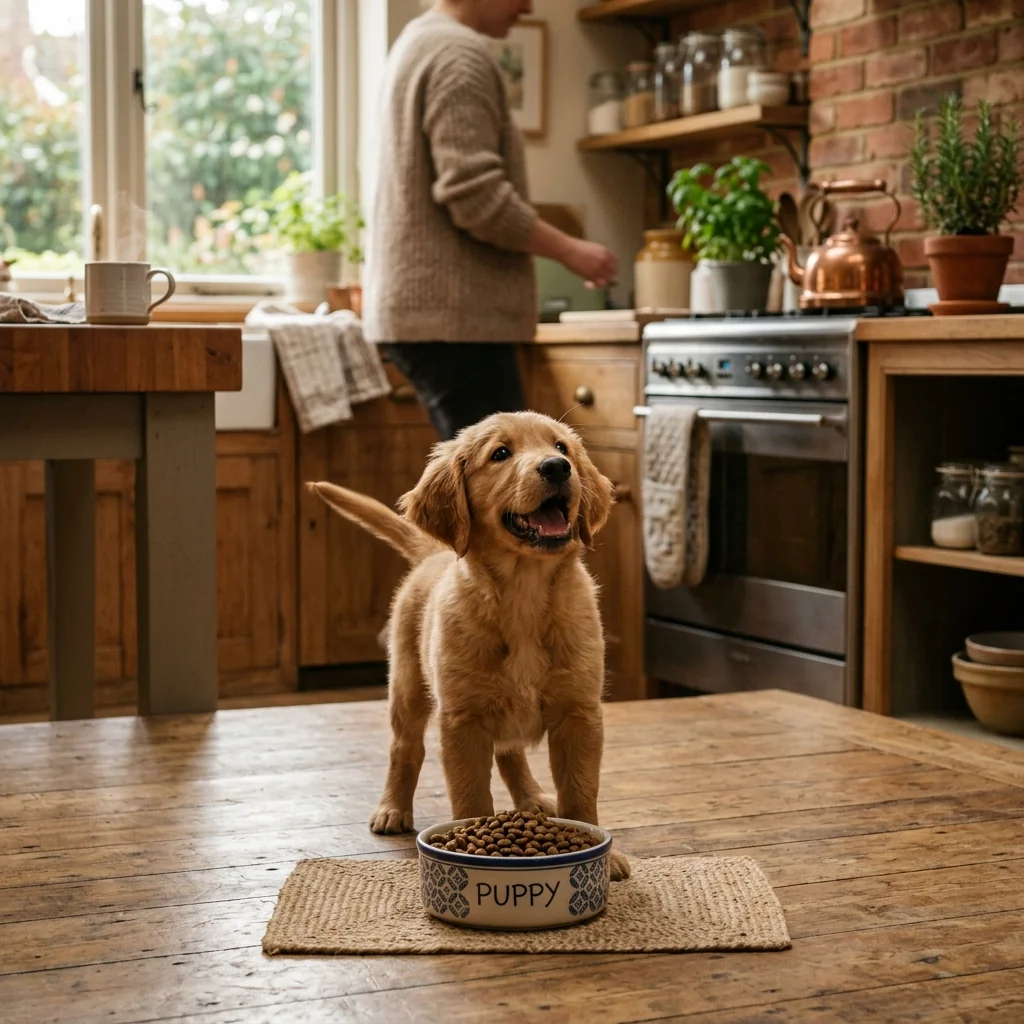
The simplest version costs nothing: take the dog's dinner, scatter it across a rug or a snuffle mat and let it find every piece. The next step up is a proper search. Put the dog behind a door, hide five pieces in a room at nose height and below, then release it with a consistent cue. Most dogs need three or four sessions before the penny drops, and then they are extremely good at it.
Puzzle feeding
- Start easy. A puzzle the dog cannot solve is frustrating, not enriching, and a frustrated dog chews the puzzle.
- Feed a whole meal through it rather than adding it as an extra.
- Stuff a rubber toy with wet food and freeze it. That turns a two-minute snack into a forty-minute job.
- Rotate the toys weekly and keep the others out of sight. Novelty is most of the value.
For cats
Cats want a hunting sequence, not a toy that moves at random. Stalk, chase, catch, kill, eat. A wand toy that darts and hides, allowed to be caught two or three times, followed immediately by a few pieces of food, completes the loop. A laser pointer never lets the cat catch anything, which is why some cats become obsessive with them; if you use one, finish by landing the dot on a real treat.
Ten minutes of nose work is worth half an hour of pavement.
Keep it calm
Indoor games should wind down, not up. Finish with something slow, a chew, a lick mat or a search that ends in a settle, so the session leaves the animal relaxed rather than looking for the next round. That is the difference between enrichment and simply making the house louder.