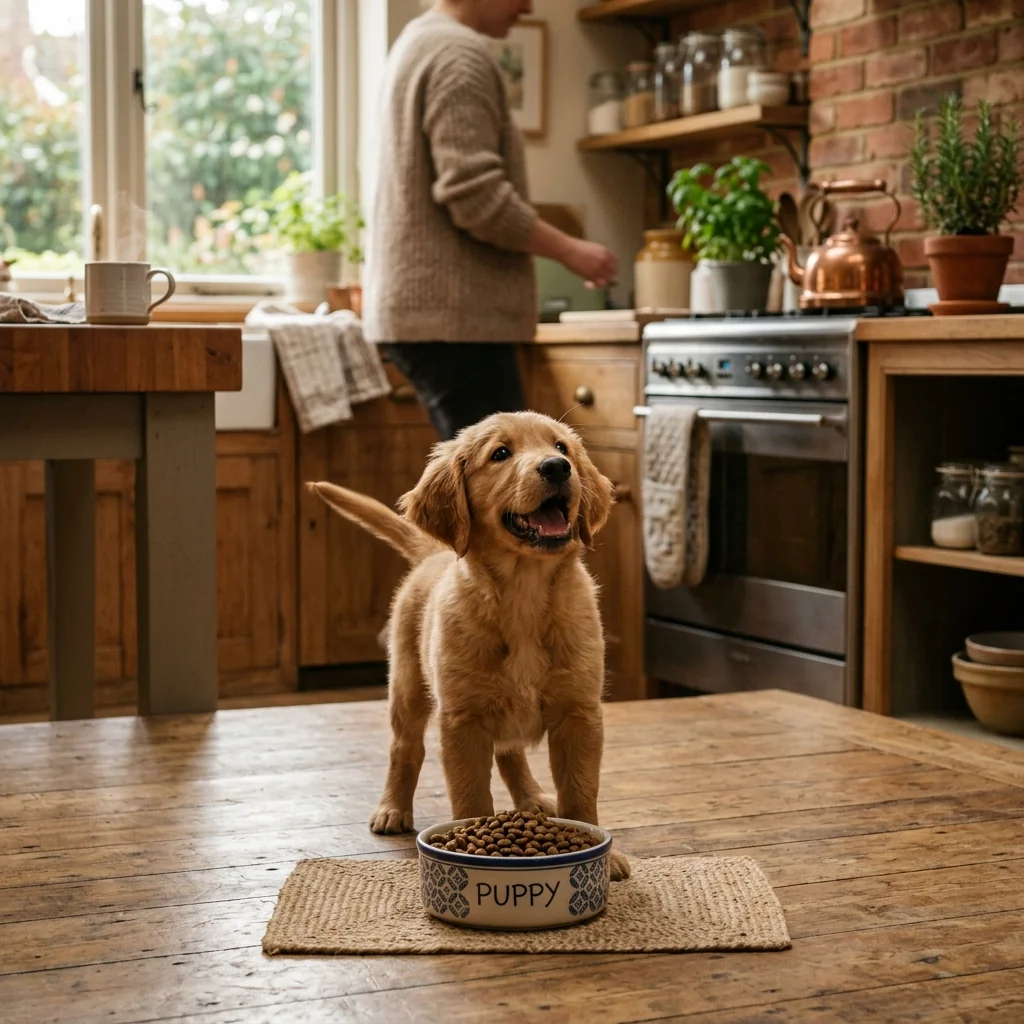
Most puppy lists are written to sell forty items. In practice the first week needs about nine, and three of the popular ones are actively unhelpful until the puppy is older. Here is the list we give people over the counter, in the order the things get used.
Buy before the puppy arrives
- The same food the breeder or shelter is feeding. A small bag, even if you plan to change later.
- Two shallow stainless bowls. Stainless because it goes in the dishwasher and does not scratch into a bacteria trap the way plastic does.
- A bed with a washable cover and low sides, sized for now rather than for adulthood.
- A soft harness and a 1.8m flat lead. Not extendable, not for the first month.
- An enzymatic cleaner. A full-size bottle, not a travel one.
- Absorbent floor pads for the first fortnight of night-time accidents.
- One puppy-safe chew with give in it, plus one toy you can stuff and freeze.
The enzymatic cleaner is the one people skip. Ordinary household cleaner removes the visible mess but leaves the scent markers a puppy navigates by, so the same corner keeps getting used. An enzyme product breaks those markers down and toilet training gets measurably shorter.
Wait on these
Hard chews, a full-size adult bed and an extendable lead all get bought in week one and put away by week three. Milk teeth cannot handle a hard chew, a big bed feels exposed to an animal that wants a den, and an extendable lead teaches a puppy that pulling extends its range, which is precisely the habit you will spend the next year undoing.
Buy for the animal in front of you, not the one in the photograph on the bag.
Wexfur care desk
The first evening
Keep the house quiet, keep visitors away for at least forty-eight hours, and put the bed somewhere the puppy can see you without being in traffic. Feed the food it already knows. Take it outside every forty-five minutes while it is awake, and straight after every sleep, meal and play session. Go out with it rather than sending it out alone. You cannot reward what you did not see.
Expect a broken first night. It is normal, it passes within a week for most puppies, and a crate or bed beside your own is the fastest route through it. If the puppy is not eating at all, has persistent diarrhoea, or seems flat rather than simply unsettled, that is a vet call in the morning and not something to wait out.
Before you act on this
General information from the Wexfur care desk, not veterinary advice. Every animal is different. Talk to your vet before changing a care routine, and book an appointment straight away if your pet seems unwell.