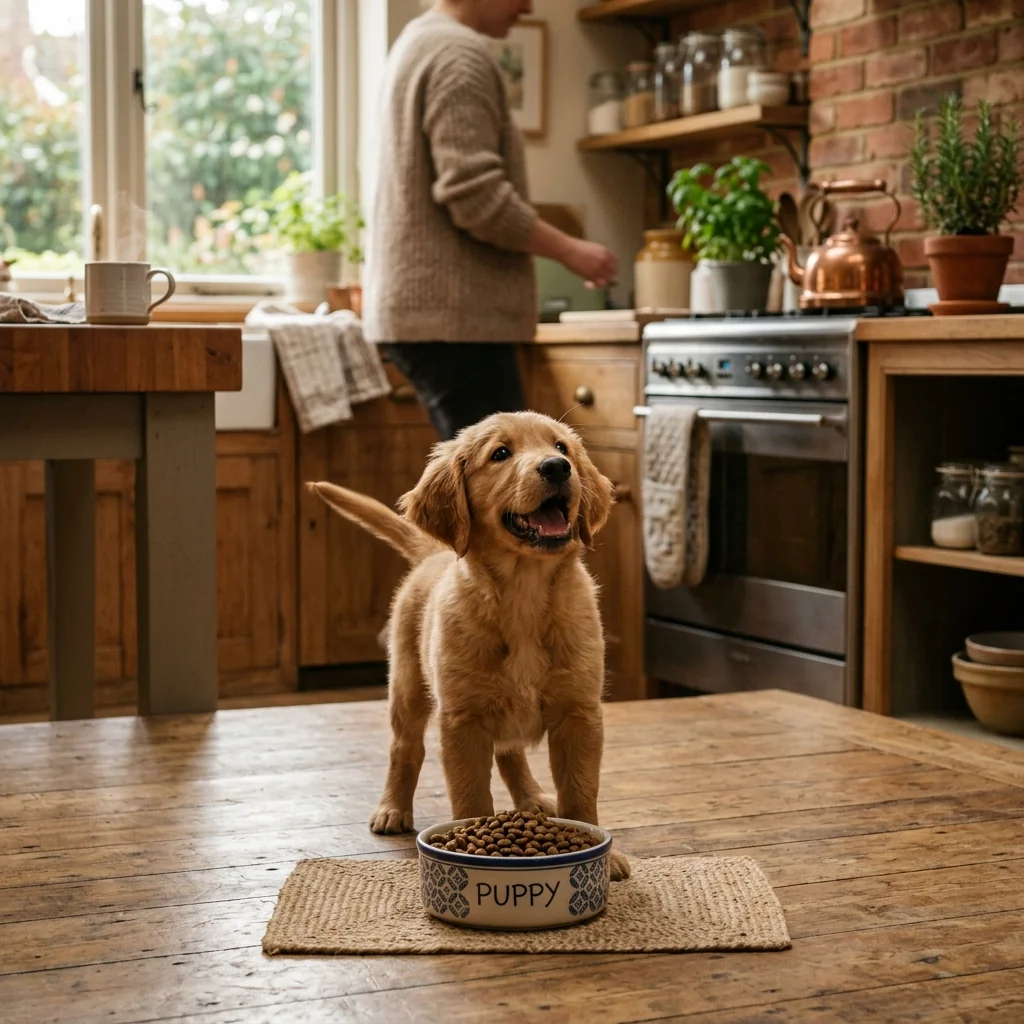
Puppies lose their milk teeth between roughly three and seven months, and during that window chewing is not naughtiness. It is relief. Give the mouth better options than your furniture and most of the problem manages itself.
Four textures, not four toys
- Cold: a wet flannel twisted and frozen, or a rubber toy filled with wet food and frozen solid. Cold is the actual pain relief.
- Soft rubber: something with real give, that dents under a thumbnail.
- Fibrous: a pressed or braided chew that shreds slowly rather than splintering.
- Fabric with a crunch: a soft toy the puppy can carry and mouth without destroying in an afternoon.
What to keep out of reach
Antlers, hooves, nylon bones, cooked bones of any kind and hard pressed-milk chews are all too hard for milk teeth and for the adult teeth arriving behind them. So are ice cubes, which are recommended constantly online and are hard enough to chip a tooth. Rope toys are fine supervised and a genuine hazard unsupervised, because swallowed strands do not pass.
Rotate and manage
Keep three or four items out and the rest away, swapping weekly. Novelty does more than quantity. Manage the environment at the same time: shoes off the floor, cables boxed, and a puppy that is loose in the house only when someone can watch it. A puppy that has never chewed a table leg does not develop a taste for table legs.
Redirect, do not scold. Take the wrong thing away and put the right thing in the mouth in the same movement.
When to ring the vet
Some bleeding at the gum line and finding a tooth in the carpet are normal. Persistent bad breath, a puppy that stops eating, obvious pain on one side, or a baby canine still in place beside the adult one at seven months are all worth a check. Retained teeth are common in small breeds and usually need removing.
Before you act on this
Chews, toys and treats carry a choking and dental-fracture risk. Supervise every session, size up rather than down, and ask your vet if your pet has had dental work or a history of swallowing objects.